Potential Uses
A wearable display brand
Your first wearable display, with a name that can follow the product line.
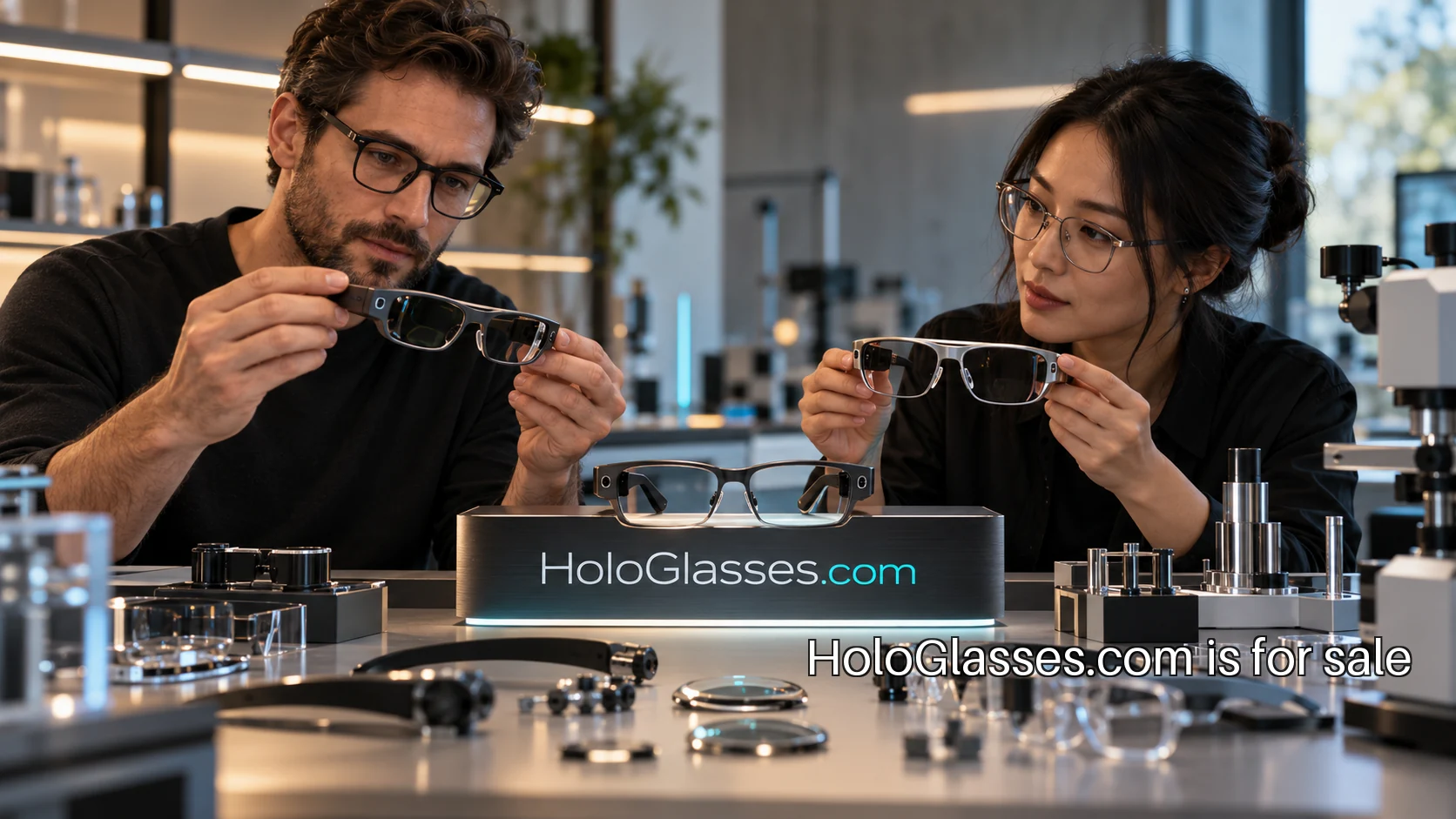
A wearable-display company can start with a very small promise: put one useful piece of information in view while a person keeps their hands on a task. That is a better starting point than a presentation full of future applications. Under HoloGlasses.com, a founder could build a hardware brand around a specific viewing experience, then let the product line grow from what users actually do with it.
Pick a first job that can be observed
Imagine a team designing glasses for technicians who need to check a short sequence while assembling equipment. The first question is whether information near the eyes helps them complete that sequence. A prototype can test the size of the text, the time spent looking away and whether the frame gets in the way. That gives the team a practical brief for its first model, with the company identity ready for the next version.
The founder should choose the environment just as carefully as the task. A quiet indoor workbench, a bright shop floor and a moving outdoor job create different demands. Begin with one of them. Write a description of the intended session, the typical wearer and the equipment already in use. That description helps an industrial designer and an electronics partner work toward the same experience instead of solving different imagined problems.
Build the sample around the whole session
The display is only part of the product. A user has to find the glasses, put them on, adjust them, start the application and return them afterward. A good prototype includes those transitions. If a staff member must reset the device between users, make that reset part of the test rather than hiding it behind a polished demonstration. The resulting product brief will be more useful to a manufacturing partner.
A first sample set can include two or three frame adjustments, a charging arrangement and a simple way to identify units. The team can label each configuration and keep a change record. When a participant prefers one sample, the founder can trace the preference to a real difference rather than a vague impression. That record becomes the basis for the next design review and the next version of the hardware.
Define the software boundary early
A hardware brand needs to decide how much software it will own. One route is a tightly controlled application for a single work task. Another is a device intended for third-party applications. Each asks for different support, documentation and testing. The first product can have a narrow software boundary while the brand retains room for later models and uses.
The Khronos OpenXR overview is a useful starting resource when evaluating a common native interface for XR applications. Actual runtime, device and extension support still needs to be checked on the chosen hardware. A team can also consult the WebXR Device API specification when considering a browser-delivered experience. These resources help frame technical questions; the prototype answers them on the intended equipment.
Make the first commercial offer specific
A founder could offer an evaluation kit to one type of organization, with a defined number of devices and a documented trial. The useful deliverable is a working session that a customer can repeat, supported by setup instructions and a clear way to report a problem. The commercial conversation can then focus on the task, the equipment and the next evaluation rather than an open-ended promise about spatial computing.
Before expanding the offer, map the work that follows a sale. Who handles a broken frame? How are devices cleaned and reassigned? What happens when the application changes? The answers affect packaging, replacement inventory and support time. Treat those as parts of product design. A case with clear compartments and an understandable reset process may matter as much to a pilot team as the appearance of the first sample.
Find the first evaluation partner
Start with a small group of equipment manufacturers and technical training providers already serving the chosen task. Their demonstration rooms and scheduled training days offer a concrete place to show the evaluation kit. A founder can prepare a short task video and a one-page kit specification, then ask a product or training manager for a supervised evaluation with a defined finish. A specialist industry exhibition can also support booked demonstrations once the kit is ready to run repeatedly.
Give the product line a consistent identity
HoloGlasses.com could appear on the evaluation case, in the setup address and on the next model’s product sheet. Holo evokes dimensional imagery; Glasses makes the subject physical. That gives the founder an identity to carry between an industrial design discussion and a customer demonstration without renaming the company around every prototype.
The founder can build the product language gradually. A first model might be described by its job and environment, with accessories named for the way they help that session. Keeping the company name consistent leaves the product descriptions free to become more precise. The next introduction can begin with the same identity and a better explanation of what the team has learned.
Start by writing the one session the first device should support, building the sample that can test it and deciding how the company will stand behind it. If HoloGlasses.com is the identity you want on that work, an acquisition conversation can begin with the product line you intend to build.
Your wearable-display company, in view.
Discuss acquiring HoloGlasses.com for your hardware brand, spatial studio or independent publication.
Get Started →